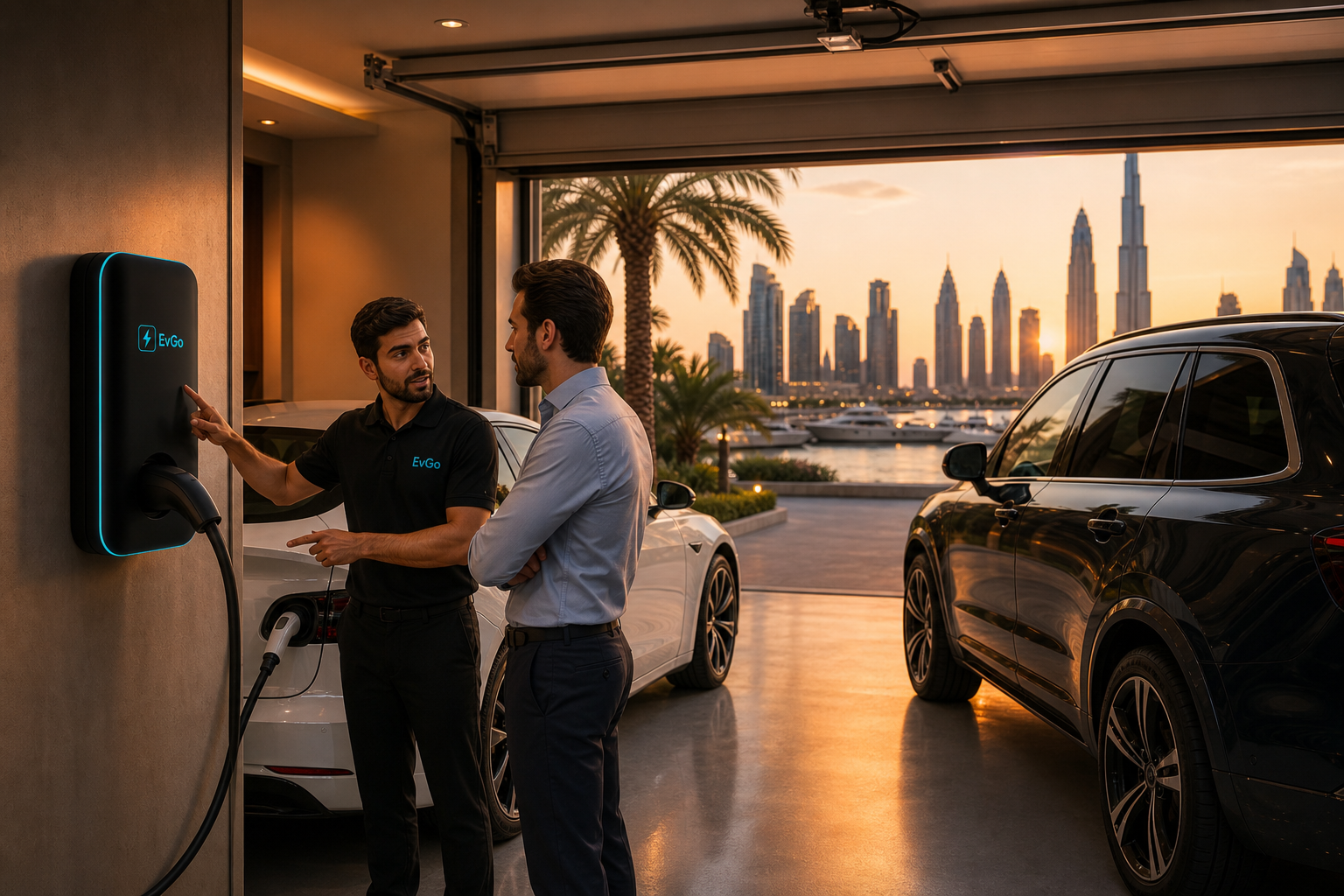
Powering Your Ride: A Guide to Choosing the Right EV Charger in the UAE
The UAE is rapidly embracing the electric vehicle revolution, with more residents and businesses making the switch to sustainable transportation. As EV adoption accelerates, understanding how to efficiently and safely charge your vehicle becomes paramount. EvGo UAE is here to simplify this journey, whether you're looking for a home charging solution or a robust setup for your commercial fleet.
Understanding EV Charging Standards: IEC 61851 and Type 2
The cornerstone of safe and compatible EV charging in the UAE and globally is the IEC 61851 standard. This international standard governs conductive charging systems for electric vehicles, ensuring interoperability and safety across different charger and vehicle manufacturers. In the UAE, the most common connector type for AC charging, compliant with IEC 61851, is the Type 2 connector. This is crucial for home and public AC charging stations, offering reliable and standardized connections.
Key Considerations for Choosing Your EV Charger
Choosing the right EV charger involves more than just plugging in. Here are the essential factors to consider:
1. AC vs. DC Charging
- AC (Alternating Current) Chargers: Ideal for homes, offices, and destinations where vehicles are parked for several hours. These chargers convert AC power from the grid to DC power internally within the vehicle. Power outputs typically range from 7kW to 22kW, offering convenient overnight or workday charging.
- DC (Direct Current) Fast Chargers: Found primarily at public charging hubs, petrol stations, and commercial depots. These chargers convert AC to DC power externally and deliver it directly to the vehicle's battery, enabling significantly faster charging (from 50kW up to 350kW+). EvGo offers robust DC solutions for fleets and public use.
2. Power Output and Charging Speed
The higher the kilowatt (kW) rating, the faster your EV will charge. For residential use, a 7kW or 11kW AC charger is generally sufficient. Businesses might opt for 22kW AC chargers or even DC fast chargers for quicker turnaround times for their fleets or customers.
3. Installation and Regulations: DEWA & ADDC
Installing an EV charger in the UAE requires adherence to local regulations set by authorities like DEWA (Dubai Electricity and Water Authority) and ADDC (Abu Dhabi Distribution Company). This includes obtaining necessary permits and ensuring the installation is carried out by certified professionals. EvGo UAE provides end-to-end services, including navigating these regulatory requirements, ensuring a safe and compliant installation.
4. Smart Features and Solar Integration
Modern EV chargers come with smart features like app control, charging schedules, energy monitoring, and load balancing. For an even greener footprint, consider chargers that integrate seamlessly with solar PV systems. EvGo UAE specializes in solar-powered EV charging solutions, allowing you to harness the abundant sunshine of the Gulf to power your vehicle, reducing both your carbon footprint and electricity bills.
Partner with EvGo UAE
Choosing the right EV charger is a significant decision. By considering the charging type, power output, regulatory compliance, and smart features, you can ensure a future-proof and efficient charging experience. EvGo UAE is your trusted partner in the region, offering a comprehensive range of IEC 61851 compliant chargers, expert installation, and dedicated support to power your sustainable journey.